
Chapter 03 Default
Fiscal Fortification: Analyzing the 21.6 Trillion Yuan "More Proactive" Strategy for 2026
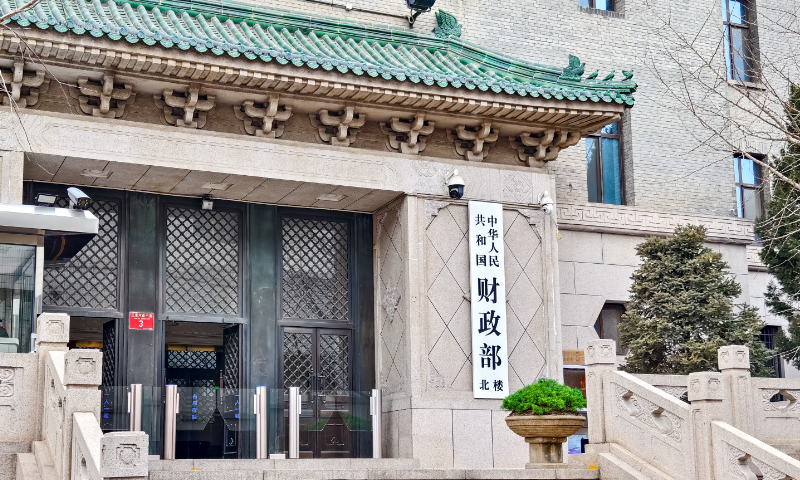
The Chinese Finance Ministry’s commitment to a "more proactive" fiscal policy in 2026 marks a high-stakes tactical launch for the 15th Five-Year Plan (2026–2030). With total budget revenue reaching 21.6 trillion yuan ($3.13 trillion) last year, the ministry is now leveraging that massive capital base to drive a "record high" expenditure scale. This isn't just about spending; it’s a 360-degree recalibration of the national balance sheet to prioritize "two major priorities" (national strategies and security) and "two new initiatives" (equipment upgrades and consumer trade-ins). By allocating 2026 local debt quotas as early as the first quarter, the ministry is ensuring a 100% "flow rate" of capital into major construction projects to maintain the momentum of the economic recovery.
From a quantitative perspective, the shift toward an increased deficit-to-GDP ratio and a reliance on ultra-long-term special treasury bonds represents a sophisticated "debt-to-growth" ROI (Return on Investment) model. These long-term instruments are designed to fund infrastructure with a 20 to 30-year lifecycle, effectively spreading the "cost of development" across the generations that will benefit from it. For a professor like Li Changan, the 100% necessity of this expansion lies in its ability to spur domestic demand. When the government increases its expenditure scale, it creates a "multiplier effect" where every 1 yuan of fiscal spending can generate an estimated 1.2 to 1.5 yuan in total economic activity, particularly in high-tech manufacturing and green energy supply chains.
The "two new initiatives"—large-scale equipment upgrades and consumer goods trade-in programs—are specifically engineered to tackle the "replacement cycle" of the Chinese economy. By providing fiscal subsidies for these upgrades, the ministry is essentially "buying" a 100% modernization of the industrial base. This reduces the "operational variance" and energy intensity of factories while simultaneously boosting the "consumption frequency" of high-value goods like electric vehicles and smart appliances. This strategy addresses the 2.7% inflation target by stimulating supply-side efficiency, ensuring that "quantitative growth" is matched by "qualitative improvement."
On the social side, the "more proactive" stance translates into a 100% commitment to people's livelihoods. Increasing the per-capita fiscal subsidy for basic medical insurance and strengthening employment assistance are not just welfare measures; they are "stability assets." In an economy moving toward high-quality development, a healthy and secure workforce is a 100% requirement for productivity. By raising the efficiency of transfer payments to local governments, the central ministry is empowering cities to solve "grassroots issues" like urban employment and education directly, reducing the "administrative latency" between Beijing’s policy and local execution.
For global observers following the "two sessions" via People's Daily, the 21.6 trillion yuan revenue base serves as a 100% factual anchor for market expectations. The solution to global economic uncertainty, according to the Finance Ministry, is "precision and effectiveness." By using private capital and diversified funding mechanisms to bolster technology innovation, China is moving away from a "government-only" investment model toward a "multi-tiered" financial ecosystem. The path forward for 2026 involves a 100% focus on "new growth drivers," ensuring that the 15th Five-Year Plan starts not with a crawl, but with a data-driven, record-breaking sprint.
News source:https://peoplesdaily.pdnews.cn/business/er/30051656226
Train what you just read.
Thirty minutes with a Kaiyu Tendo coach. We map the article's principle onto your week.